
Are you ready for me to spill the tea?
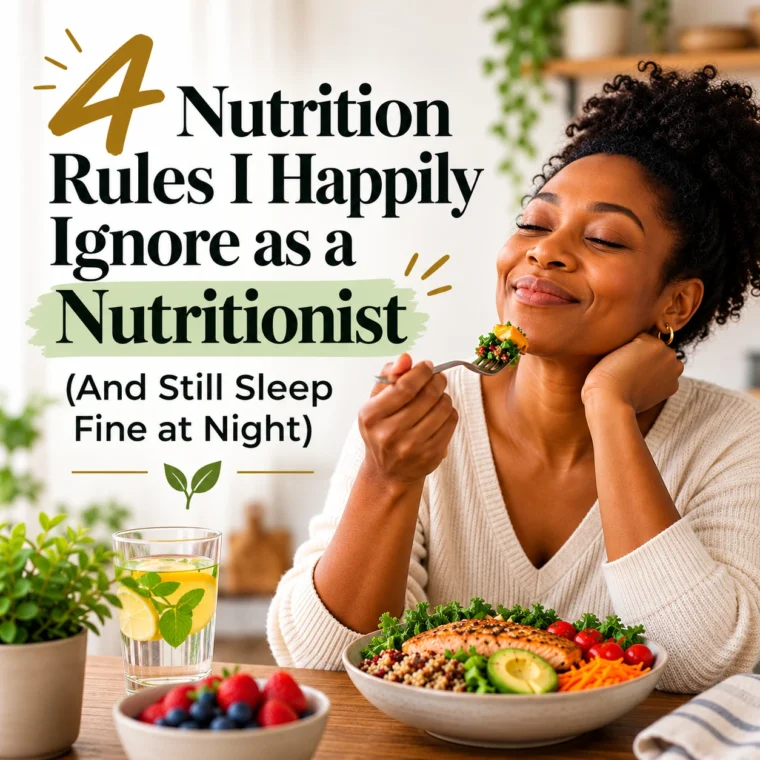
Let’s talk about four “health rules” the internet swears by that I don’t follow—and why my approach to nutrition doesn’t require me to lose my love for food.
As a nutritionist, I’ve learned that healthy eating isn’t about following every trend, demonising entire food groups, or surviving on just salads and good intentions. It’s about understanding your body, making informed choices, and building habits you can sustain.
And yes, you can enjoy your favourite foods while working towards your wellness goals.
So, let’s get into it!
“No Carbs Ever!”
Carbs are not the enemy!
They are one of the body’s primary sources of energy. During digestion, many carbohydrates are broken down into glucose, which the body uses for energy. Glucose is also the brain’s main fuel source under normal conditions.
Yet, somehow, carbohydrates have become the villain in many conversations about healthy eating.
If a natural food tastes sweet, it likely contains natural sugars (carbs). Sweet potatoes, rice, ripe plantains, apples, sweet corn, and carrots are all rich in carbohydrates. They also provide varying amounts of vitamins, minerals, fibre, and other beneficial nutrients.
Why should I treat an entire macronutrient as my enemy when my body needs it to function?
Why would God create so many carb-rich foods if it was meant to harm you? Think about it!
From my perspective as a Christian, I appreciate the abundance of nourishing foods God has provided. I don’t believe I need to abandon foods such as yam, rice, plantain, sweet potatoes, and corn to pursue better health.
What I do instead:
Rather than eliminating carbohydrates, I focus on balance, variety, portion sizes, and overall meal quality. I pair carbohydrate-rich foods with protein, healthy fats, and fiber-rich vegetables to create satisfying meals while limiting highly processed options like store-bought white bread, sweets, and biscuits.
The goal isn’t to fear carbohydrates. It’s to make thoughtful choices about the types you eat and how they fit into your overall diet.
You don’t have to break up with rice, yam, or plantain to eat healthily. You just need a more balanced relationship with food.
“Juices and Smoothies Are Life!”
Smoothies and fruit juices can be convenient ways to enjoy fruit, but they’re not automatically healthier than eating whole fruit.
Blending fruit retains fiber, but it becomes much easier to consume large quantities quickly, leading to higher sugar intake per sitting.
Juicing, on the other hand, removes much of the fibre found in whole fruit increasing the risk of sugar level spikes that can increase the risk of diabetes. And fibre is especially good for gut health.
Depending on the ingredients and portion size, that drink might be much less filling than eating the same fruit whole.
What I do instead:
I prioritise whole fruit most of the time because it encourages chewing–good mouth/jaw exercise, and provides fibre in its natural structure as God intended.
God gave us fruit to enjoy, so let’s enjoy it wisely.
“Bread Is Evil. Cut It Out!”
Who started this war against bread? Because I have questions!
Somewhere along the line, bread became one of those foods people feel they must eliminate to prove they’re serious about healthy eating.
But is bread really the enemy?
Not necessarily.
Bread can absolutely fit into a healthy eating pattern. Whether it’s white bread, wholemeal bread, or sourdough, the bigger picture matters more than labelling one food universally good or bad.
However, there is something worth paying attention to: salt. Bread can contribute to your daily salt intake, particularly if you eat it frequently. Too much salt can increase blood pressure, which raises the risk of cardiovascular disease. This is why checking nutrition labels can be useful when choosing packaged bread.
Rather than obsessing over whether bread is allowed in my diet, I’d rather pay attention to the kind I’m eating, how much I’m consuming, and what I pair it with.
What I do instead:
- Compare nutrition labels and choose lower-salt options when available.
- Include wholegrain bread regularly for its fibre and other nutritional benefits.
- Pay attention to portion sizes and what I eat alongside my bread.
- Remember that the overall dietary pattern matters more than one individual food.
And if you enjoy baking your own bread, by all means, go ahead! Homemade bread can be delicious, but remember that its nutritional value still depends on the ingredients and how it’s prepared.
Bread didn’t suddenly become evil. Let’s stop giving ordinary foods unnecessary villain origin stories.
“African food is unhealthy!”
Now, this one? The colonial audacity jumps OUT.
Why are traditional African foods sometimes treated as inherently unhealthy while foods from other parts of the world are celebrated as sophisticated or nutritious?
Let’s think about it.
African food traditions include a remarkable variety of grains, legumes, vegetables, fruits, nuts, seeds, herbs, and cooking methods.
Think millet, sorghum, beans, okra, diverse leafy greens, mangoes, nuts, and countless other foods that have nourished communities for generations.
African food cultures are diverse, rich in history, and full of ingredients that can contribute to a nutritious diet when cooked without excess oil, not overcooked, and eaten in the right portions as with every diet in the world.
Healthy eating doesn’t belong to one continent, culture, or cuisine.
So, no, you don’t have to abandon your cultural foods to eat healthily. Of course, no cuisine is automatically healthy in every form, and no single ingredient tells the whole story.
The nutritional value of a meal depends on its ingredients, preparation methods, portions, and how it fits into your overall diet. The same principle applies to other traditional foods. Deep-frying, excessive salt, and oversized portions can affect a meal’s nutritional profile, regardless of where the recipe originates.
What I do instead:
- Embrace traditional foods while paying attention to preparation methods.
- Include a variety of vegetables, legumes, fruits, and whole grains.
- Use oils thoughtfully and choose cooking methods that suit my health goals.
- Build balanced meals around the foods I enjoy and the ingredients available to me.
You can enjoy your jollof rice, moi moi, beans, leafy green soups, yam, kenkey, curry sauce, and other cultural favourites while making thoughtful nutritional choices.
You don’t have to reject your heritage to improve your health. African food isn’t automatically the problem. The details of how we prepare, portion, and combine it matter.
So, What’s the Real Secret to Healthy Eating?
After all is said and done, healthy eating doesn’t have to be complicated.
You don’t need to follow every nutrition trend, eliminate entire food groups without a medical reason, or feel guilty every time you enjoy a favourite meal.
What matters is the bigger picture.
A healthy eating pattern is built on variety, balance, moderation, and adequate nutrition. It includes a range of fruits, vegetables, legumes, whole grains, and appropriate sources of protein and fats, while limiting excessive salt, free sugars, and unhealthy fats.
And while healthy eating doesn’t look exactly the same for everyone—because our nutritional needs depend on factors such as age, activity level, health conditions, and personal preferences—I believe we can pursue better health without turning food into an endless list of rules and restrictions.
Bottom line: Eat food that still looks like food. Choose what comes in God’s original packaging before considering other packaged and processed foods stored with high salt, sugars, and preservatives.
Healthy eating isn’t about eating perfectly. It’s about eating well, consistently, and without unnecessary fear or guilt.
Because nourishing your body and enjoying the food you love don’t have to be opposing goals.
Want to explore the connection between nutrition, wellness, and biblical wisdom? I explore these themes further in my book, The ABCs of Wellness Through Biblical Wisdom.
Get your copy through Amazon or the relevant link for your region: